Joseph Everts
Student number:
3073411
Lecturer: Ms Shehaamah Mohamed
20/10/2017
Effects of Euthanasia on the bereaved family and friends.
Images:
Image 1:
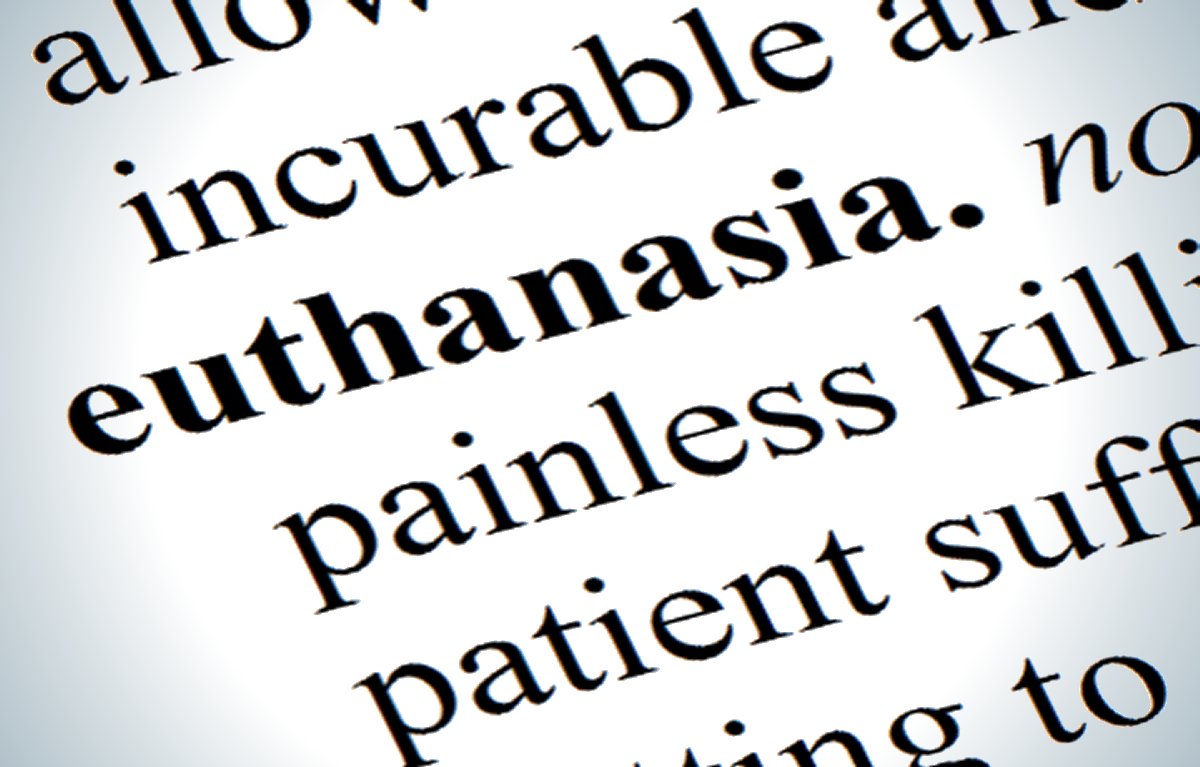
Euthanasia is the painless killing of a person
suffering from an incurable disease.

Free License permits: Sharing, copying and
redistributing in any medium or format including adapting, remixing,
transforming, and building upon the material for any purpose, even
commercially. Attribution required.
License: Creative Commons 3 - CC BY-SA 3.0 Creator attribution: Nick Youngson - link to - http://nyphotographic.com/
Images 2:

License: Creative Commons 3 - CC BY-SA 3.0
Creator attribution: Nick Youngson - link to - http://nyphotographic.com/
Image 3:

Photo by Creative Commons Images.
Free
License permits: Sharing,
copying and redistributing in any medium or format including adapting,
remixing, transforming, and building upon the material for any purpose, even
commercially. Attribution required.
Creator
attribution: Nick
Youngson - link to - http://nyphotographic.com/
Date
first licensed: June
2016
Original
Image:
http://www.creative-commons-images.com/handwriting/e/euthanasia.html
Image 4:

You are free to:
- Share — copy and redistribute the material in any medium or format
- Adapt — remix, transform, and build upon the material for any purpose, even commercially.
Licensor cannot revoke these freedoms as long
as you follow the license terms.
Attribution —
You must give appropriate
credit, provide a link to the license, and indicate if changes were
made. You may do so in any reasonable manner, but not in any way that
suggests the licensor endorses you or your use.
Image5:

You are free to:
- Share — copy and redistribute the material in any medium or format
- Adapt — remix, transform, and build upon the material
- for any purpose, even commercially.
The
licensor cannot revoke these freedoms as long as you follow the license terms.
Attribution —
You must give appropriate
credit, provide a link to the license, and indicate if changes were
made. You may do so in any reasonable manner, but not in any way that
suggests the licensor endorses you or your use.
Open
Educational Content:
1). Philosophy of death
Media
Format:
Audio, Downloadable docs,
Text/HTML, Video
Abstract:
This course provides an in-depth
introduction to the philosophical problems surrounding death; it is organized
around the lectures of Shelly Kagan, Professor of Philosophy at Yale
University, who develops his own philosophy of death over the length of the
course.
You are welcome to share, remix, and adapt this course under the terms of the Creative Commons Attribution 3.0 Unported License; however, many linked materials within this course are copyright of their respective authors/owners and may not be openly-licensed. Please respect the copyright and terms of use associated with each resource.
Copyright
Holder:
The Saylor Foundation
2). Moral problems and the
Good life , Fall 2008
Material
Type:
Activity/Lab, Full Course,
Lecture Notes
Media
Format:
Downloadable docs, Text/HTML
Abstract:
" This course will focus on
issues that arise in contemporary public debate concerning matters of social
justice. Topics will likely include: euthanasia, gay marriage, racism and
racial profiling, free speech, hunger and global inequality.
Creative Commons Attribution-NonCommercial-ShareAlike 3.0
Conditions of Use:
3). Bio-Ethics Bites
Lectures
Bioethics
is the study of the moral implications of new and emerging medical technologies
and looks to answer questions such as selling organs, euthanasia and whether
should we clone people. The series consists of a series of interviews by
leading bioethics academics and is aimed at individuals looking to explore
often difficult and confusing questions surrounding medical ethics. The series
lays out the issue in a clear and precise way and looks to show all sides of
the debate.
Subject:
Material
Type:
Provider:
Provider
Set:
Author:
Jonathan Wolf|Julian
Savulescu|Jeff McMahan|Peter Singer|Nick Bostrom|Onora O'Neill|Jonathan
Wolf|Tim Lewens|Hanna Pickard|Molly Crocket|Patricia Churchland
4). Case study: A good death
or is it Physician Assisted Suicide?
Subject:
Health, Medicine and Nursing
Provider:
Material
Type:
Case Study
Media
Format:
Text/HTML
Abstract:
Mr. Perry wants doctors to turn
off his pacemaker. Would doing so respect Mr. Perry’s rights and autonomy? Or,
would it be physician-assisted suicide? (view case study).
- Attribution — You must give appropriate credit, provide a link to the license, and indicate if changes were made. You may do so in any reasonable manner, but not in any way that suggests the licensor endorses you or your use.
- No additional restrictions — You may not apply legal terms or technological measures that legally restrict others from doing anything the license permits.
You are free to:
- Share — copy and redistribute the material in any medium or format
- Adapt — remix, transform, and build upon the material
- for any purpose, even commercially.
5). The Plan: Ethics and Physician Assisted Suicide.
Author:
Subject:
Health, Medicine and Nursing,
Life Science
Provider:
Case
Study Collection Material
Type:
Case Study
Media
Format:
Text/HTML
Abstract:
This case study on
physician-assisted suicide is used in a medical ethics course. The case itself
is a short article published in 1991 in the New England Journal of Medicine
in which Dr. Timothy E. Quill
described his care for a patient suffering from acute leukemia, including how
he prescribed a lethal dose of barbiturates knowing that the woman intended to
commit suicide. As a consequence of the article's publication, a grand jury was
convened to consider a charge of manslaughter against Dr. Quill.
Copyright
Copyright for the case studies on our website is held by the National Center for Case Study Teaching in Science (NCCSTS). To see whether you need permission to reuse our materials, review our usage guidelines.
Please note that images on
our site that are not owned by NCCSTS are either licensed, used with direct
permission from their sources, believed to be in the public domain, or
incorporated into our material according to “fair use” guidelines. Proprietary
third-party images that appear according to “editorial usage” generally have
their sources acknowledged in a credit statement at the bottom of the page on
which they appear. Licensed images that have been used strictly for design
purposes may be acknowledged, depending on licensing requirements. If you wish
to use such an image in addition to our textual content in a manner that goes
beyond “fair use,” please visit the original source and contact the owner
directly.
5 Media:
1).
Understanding Assisted Suicide
Nine Issues to Consider
John B. Mitchell
You are free to:
- Share — copy and redistribute the material in any medium or format
- Adapt — remix, transform, and build upon the material
- for any purpose, even commercially.
Under the following terms:
·
Attribution — You must give appropriate credit,
provide a link to the license, and indicate if changes were
made. You may do so in any reasonable manner, but not in any way that
suggests the licensor endorses you or your use.
- No additional restrictions — You may not apply legal terms or technological measures that legally restrict others from doing anything the license permits.
2)
When Doctors help end lives
Copyright Notice
All materials contained on this site are protected by United States copyright law and may not be reproduced, distributed, transmitted, displayed, published or broadcast without the prior written permission of The New York Times Company or in the case of third party materials, the owner of that content. You may not alter or remove any trademark, copyright or other notice from copies of the content.However, you may download material from The New York Times on the Web (one machine readable copy and one print copy per page) for your personal, noncommercial use only.
Links to Web sites other than those owned by The New York Times Company are offered as a service to readers. The editorial staff of The New York Times was not involved in their production and is not responsible for their content.
For further information, see Section Two of the Terms of Service.
To contact other Times departments, see the Help section of NYTimes.com.
3) Evaluation of the Notification Procedure for Physician-Assisted Death in the Netherlands
Copyright © 2017 Massachusetts
Medical Society. All rights reserved.
MMS Copyright Policy
Material on this website is covered by copyright. No reproduction or
distribution, in whole or in part, of this material is authorized without the
express written consent of the Massachusetts Medical Society.Notification of Copyright Infringement Claims in Accordance with 17 U.S.C. Section 512
The Massachusetts Medical Society respects the intellectual property ownership rights of others. If you believe that any copyrighted work in which you own an exclusive right is accessible on or through this website in a way that infringes your right, you may notify us by providing the following items to our designated agent:- A physical or electronic signature of the owner, or a person authorized to act on behalf of the owner, of an exclusive right that is allegedly infringed;
- Identification of the copyrighted work, or a representative listing of the copyrighted works, that you claim have been infringed;
- Identification of the material that you claim to be infringing or to be the subject of infringing activity and information reasonably sufficient to locate the material;
- Information for contacting you, including your address, telephone number, and, if available, electronic mail address;
- A statement that you have a good faith belief that the claimed infringement is not authorized by the copyright owner, its agent, or the law; and
- A statement that the information in your notice is accurate, and under penalty of perjury, that you are the owner, or are authorized to act on behalf of the owner, of an exclusive right that is allegedly infringed.
By mail: Roberta L. Coen, Esq., Massachusetts Medical Society, 860 Winter Street, Waltham, MA 02451-1411
By telephone: (781) 434-7068
By electronic mail: rcoen@mms.org
4) Canada Legalizes Physician-Assisted Dying
Copyrights
The contents of the NPR Services are protected by U.S. and international copyright laws. The contents of the NPR Services are owned by or licensed to NPR or NPR's member stations and other producers or providers of programs or other content to NPR ("Content Providers"). In the case of User Materials (as defined in the "User Materials" section of these Terms of Use), the contents are licensed to NPR by the user. You may not reproduce, distribute, republish, upload, transmit, display, prepare derivative works of, publicly perform, sell, transfer, assign, license or use for commercial purposes any copyrighted material on the NPR Services without the prior written consent of NPR, except as provided in these Terms of Use. All rights not expressly granted in these Terms of Use are reserved to NPR.Attributions & Third-Party Notices
Certain third-party content made available through the NPR Services may be subject to other terms. Where applicable, the following provisions may apply:Associated Press ("AP"). For terms applicable specifically to AP content made available in the NPR Services, see the AP Notice.
5) Assisted suicide robs the dying of compassion.
Copyright
© 2017 America Press Inc. | All Rights Reserved.

No comments:
Post a Comment